No buttons, no switches.
Just a cylinder and the perfect amount of light.
Designed by
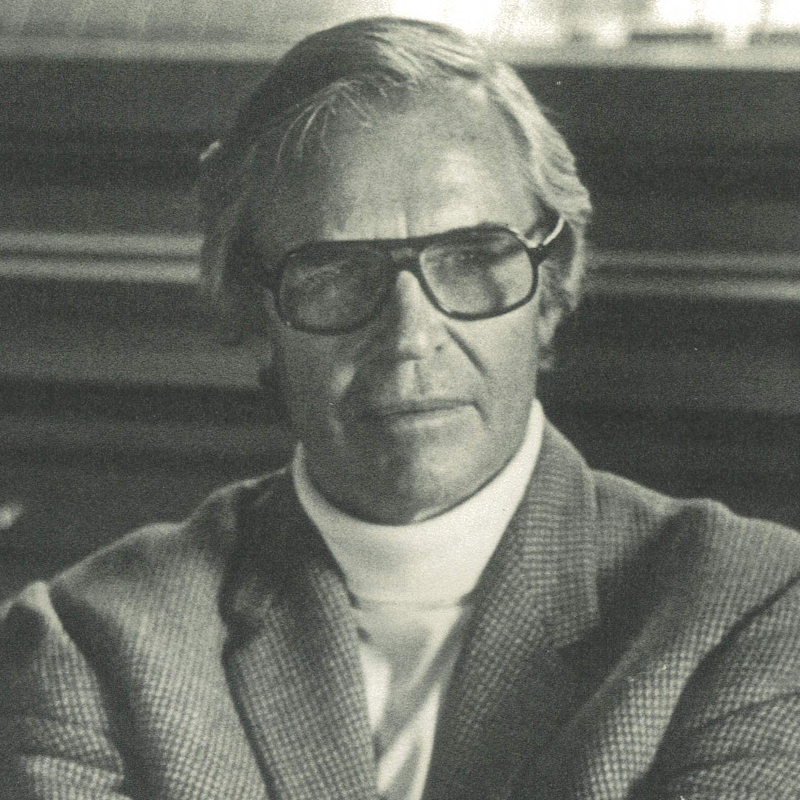
Theodore H. Waddell, Architect


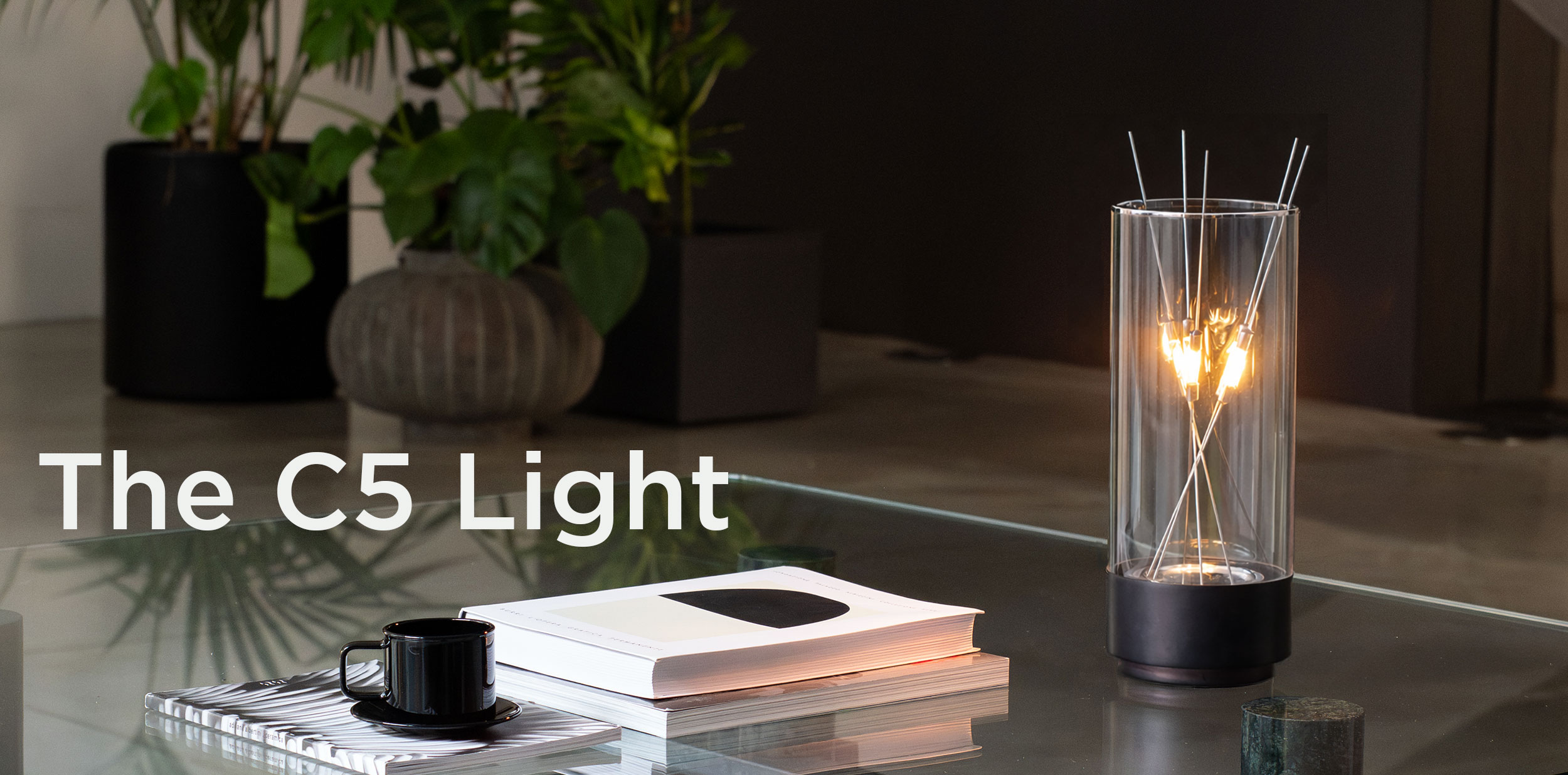
No buttons, no switches.
Just a cylinder and the perfect amount of light.
Designed by
Theodore H. Waddell, Architect
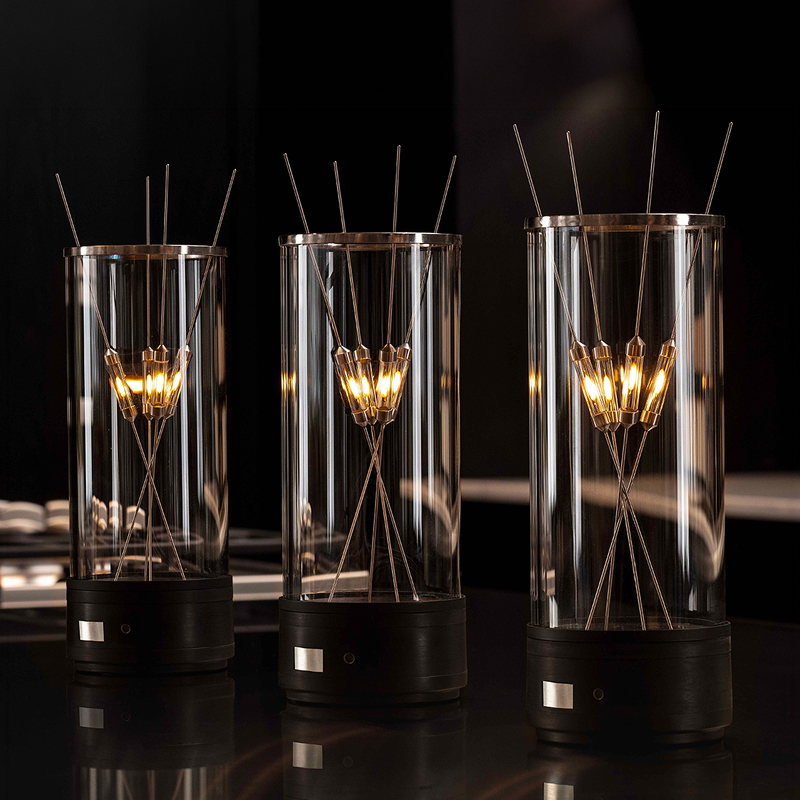
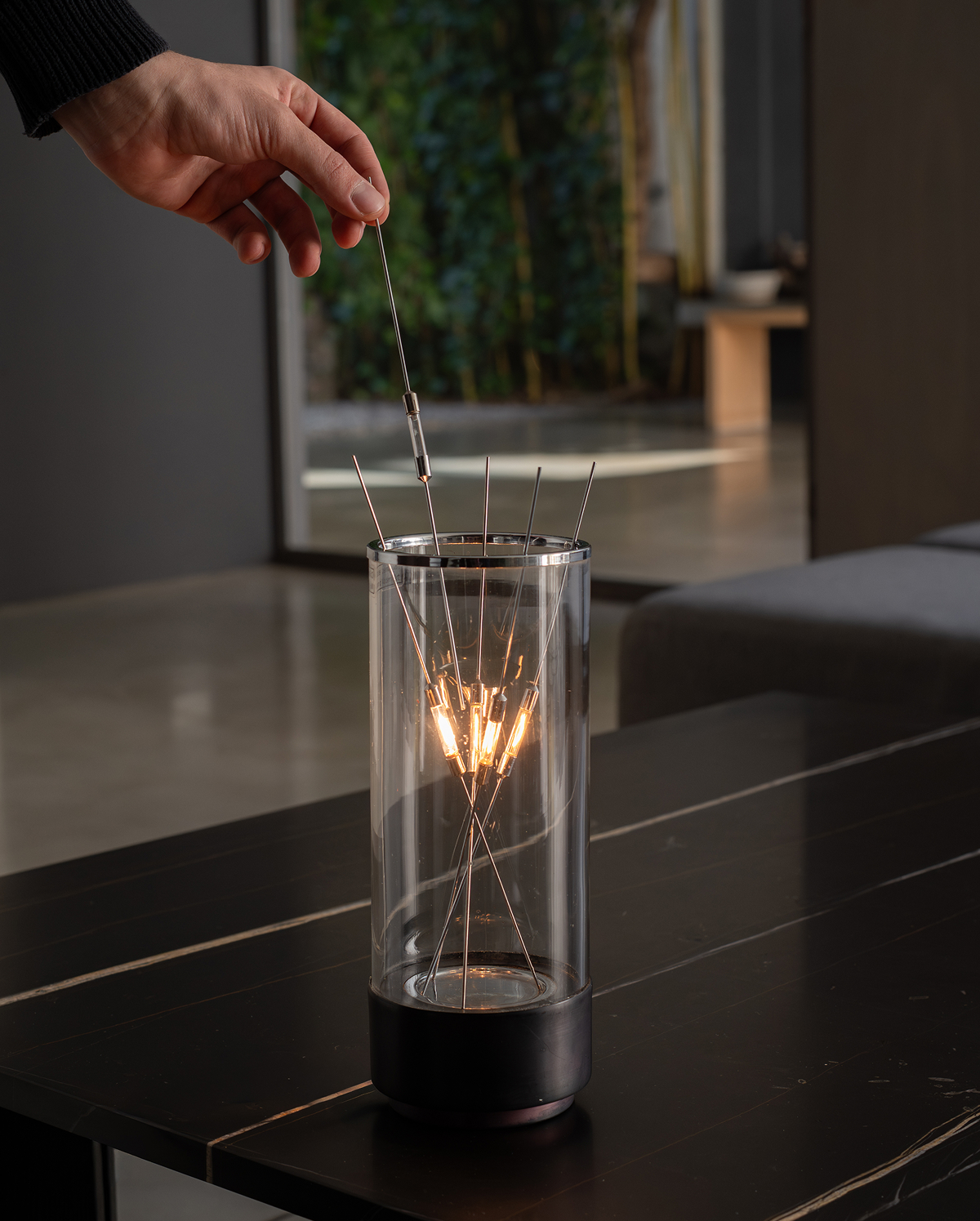
A perfect lighting object, the C5 gives the appropriate amount of light. It stems from the desire to “throw a handful of light”–a simple, instinctive, almost primal act. Theodore Waddell overturns the convention of the mechanical switch, placing light back into the user’s hands.
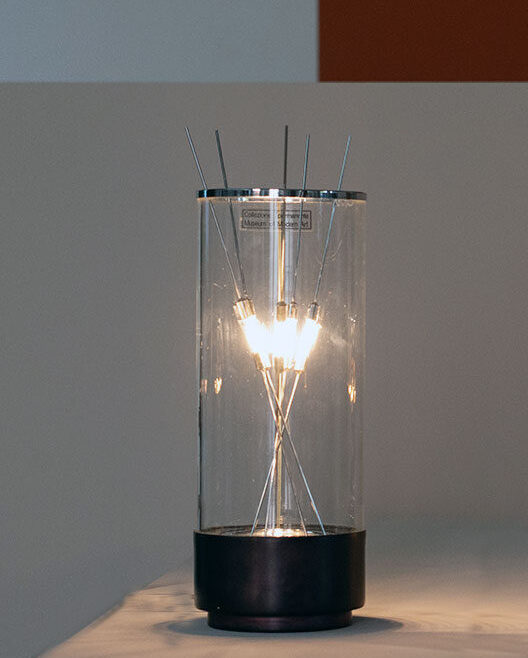
The lamp consists of a cylinder of glass, a transformer base, and independent light sticks. No button is pressed: the sticks are gathered by hand and placed randomly into the cylinder. The contact generates the light restoring a human, intuitive and participatory dimensions to the object.
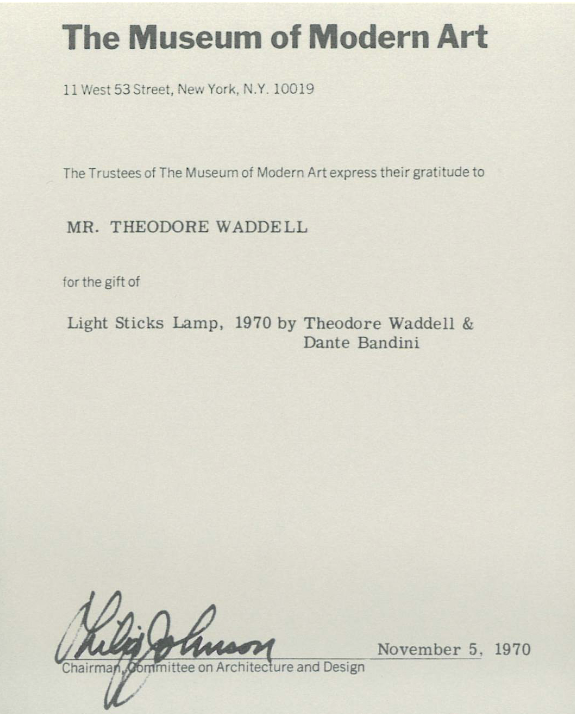
A recognized icon of experimental design, this lamp entered the permanent collection of the MoMA in New York as early as 1970 and has been exhibited in the Louvre and the Centre de Création Industrielle.
Brought back by Participation Designs, the B7 is technically updated to meet current safety standards without altering its original spirit. It allows users to choose between 4, 8, 12 or 16 light sticks, enabling free modulation of intensity. In every configuration, light is never imposed – it is constructed by the user.
Technicals
Structure
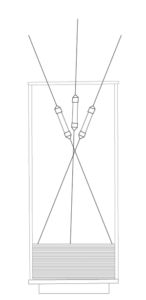
A glass cylinder with an electrified chrome rim and base plate.
Operation
Activation via physical contact of the light sticks. No mechanical switches.
Safety
Integrated transformer reducing current to low voltage for completely safe interaction.
Configuration
Modulate atmosphere by using 4, 8, or 12 light sticks.
Finishes
Glass, Chrome, and Luminous elements.
Backstory
The C5 is a precise balance between beauty, technology, and function. While the amount of light is controlled by the user, the construction is rigorous: the base contains a transformer that keeps the interaction safe. The bottom plate features a subtle groove to hold the stick ends, while the cylinder of glass allows the sticks to rest without shorting the circuit.
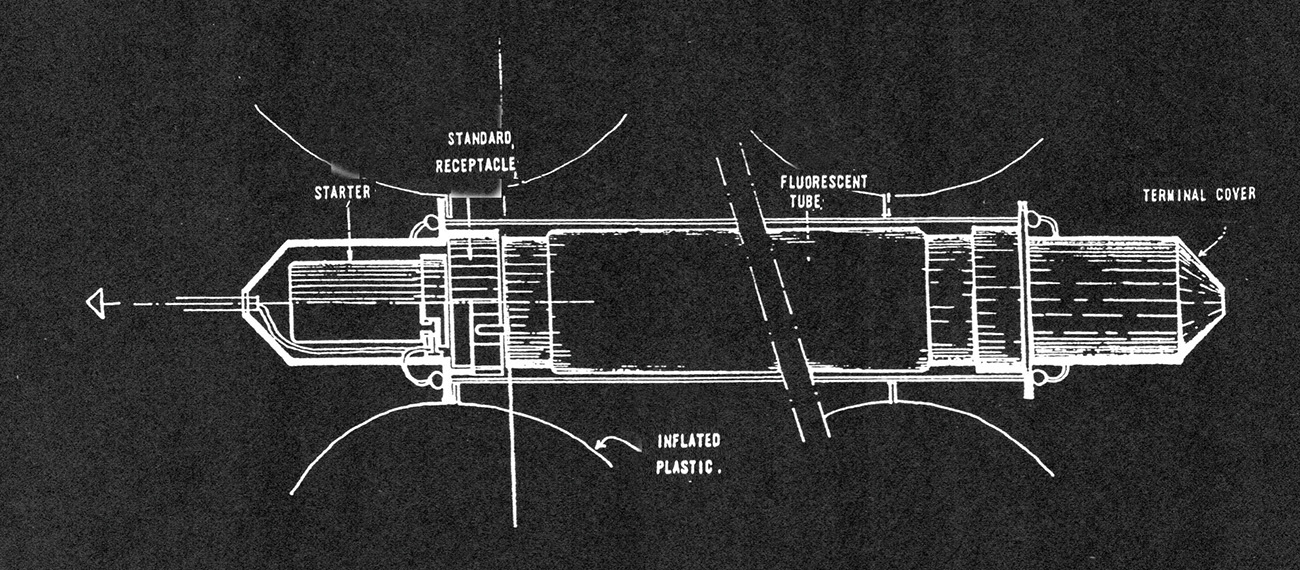
The light stick and the base contain all of the technology. The light stick and it’s chrome ends, connect to the transformer and ground on either end. Technology remains invisible; what emerges is the the experience, not the device.
LIGHT IS NOT SOMETHING THAT SIMPLY HAPPENS, BUT SOMETHING THAT IS CREATED. A HANDFUL OF LIGHT, RESTORED TO A HUMAN GESTURE.